

The Presence of Elephants in Odisha’s Artistic and Cultural Memory
In Odisha, elephants occupy a quiet yet commanding place in cultural expression. They are not shown merely to decorate space or illustrate myth; they appear because they mattered. Over centuries, the elephant became part of how the region understood power, prosperity, and order, and this understanding found lasting form in art, ritual, and social memory.

The stone temples of Odisha offer early testimony. Sculptors carved elephants with attention to physical detail and movement, suggesting familiarity rather than fantasy. Bands of elephants often appear along temple foundations, visually grounding sacred structures. This was not accidental. Elephants represented strength and permanence—qualities expected to support both temples and kingdoms. Their placement conveyed the idea that divine order rested upon worldly stability.
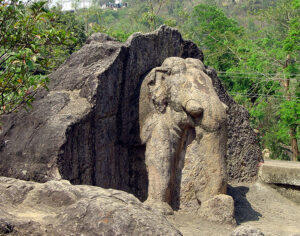
Religious imagery further strengthened this bond. The figure of Gajalaxmi appears repeatedly in Odishan sculpture and painting, with elephants performing ritual acts around the goddess. This scene carried meaning drawn from everyday life. Elephants were central to trade, forest management, and transport. Their association with wealth was earned through work, and religious art absorbed this reality into spiritual symbolism.
Political culture in Odisha also elevated the elephant. The adoption of the title Gajapati by its rulers placed elephants at the heart of kingship. To be a Gajapati was to claim authority over land, people, and the means that sustained the state. Even today, the ceremonial role of the Gajapati of Puri in the Jagannath tradition reflects this historic link between rulership, ritual duty, and moral responsibility.
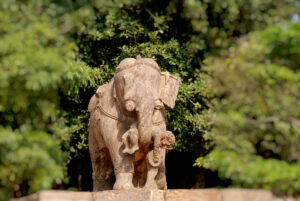
Beyond temples and courts, elephants appear in folk traditions, local crafts, and oral narratives. They are remembered as disciplined, intelligent, and dependable companions rather than fearsome beasts. Communities that lived close to forests understood elephants as part of their environment, and this understanding shaped how they were portrayed—calm, steady, and dignified.
Odisha’s long coexistence with elephants left a cultural imprint that goes beyond representation. Art did not invent the elephant’s importance; it recorded it. Through sculpture, painting, and tradition, Odisha preserved the memory of an animal that once helped carry its economy, authority, and spiritual life forward.
In this sense, the elephant in Odisha’s art is not a symbol borrowed from belief, but a reflection of lived history—where culture, nature, and power moved together.
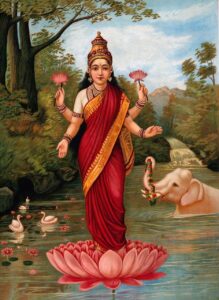
Gajalaxmi, Gajapati, and Elephants in the Ancient World
In ancient India, elephants were part of everyday power, not distant symbols. They shaped how people understood wealth, authority, and order. Ideas like Gajalaxmi and Gajapati did not emerge from imagination alone; they reflected lived realities.
The form of Gajalaxmi, where elephants flank Goddess Lakshmi, grew out of experience. Prosperity in early societies depended on strength, stability, and movement. Elephants made that possible. They carried heavy loads through forests, kept trade routes open, and supported large-scale activity that smaller animals or carts could not manage. Where elephants worked, economic life expanded. It was natural, then, that they became associated with abundance and good fortune.
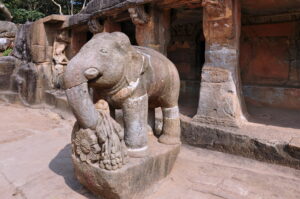
The title Gajapati—the one who commands elephants—was equally grounded in practice. Rulers who controlled elephants controlled transport, military logistics, and recovery after war or disaster. Elephants moved supplies, cleared paths, and served as instruments of authority on land that was otherwise difficult to govern. Power was not just about armies; it was about managing these animals.
Beyond religion and kingship, elephants were central to daily life. Traders relied on them, workers depended on them, and communities grew around their care. They were respected because they were useful, intelligent, and essential.
In ancient India, elephants stood where economy, power, and belief met. Gajalaxmi and Gajapati are reminders that prosperity once rested not on machines, but on a careful partnership between human ambition and natural strength.
The Elephant in India’s Story
In India, the elephant is not remembered merely as a creature of awe. It occupies a far more consequential space—one where economy, belief, and survival intersect. Across centuries, elephants shaped how people moved, traded, worshipped, and governed. They were not ornamental symbols of power; they were active participants in building it.
Before the arrival of mechanised transport, India’s vast and varied terrain posed a serious challenge to commerce. Forest belts, river plains, and rugged routes could isolate entire regions. The elephant became the solution to this problem. With unmatched strength and intelligence, it turned impassable stretches into functioning corridors. Fallen trees were cleared, broken paths restored, and riverbanks stabilised. Where wheels failed, elephants succeeded.
Trade did not simply pass through these routes—it revived because of them. Merchants preferred caravans supported by elephants, knowing their presence reduced risk and increased capacity. Heavier goods could travel longer distances, markets could reconnect after disruptions, and supply chains regained reliability. In this sense, elephants were not passive carriers; they were catalysts. Their movement reactivated economic circulation, allowing wealth to flow once again between regions.
This economic role extended far beyond trade alone. Elephants powered entire labour ecosystems. They hauled timber from dense forests, moved stone for construction, and supported mining and agricultural activity. Around them grew skilled professions—mahouts, healers, trainers, fodder suppliers—each dependent on the elephant’s wellbeing. Prosperity generated by elephants was not concentrated; it spread through communities, sustaining livelihoods across generations.
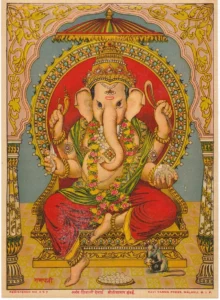
India’s religious imagination absorbed this reality seamlessly. The reverence for Lord Ganesha did not emerge from symbolism detached from daily life. The elephant-headed deity became the guardian of new beginnings because elephants themselves made beginnings possible—new journeys, new ventures, new markets. Worship followed experience. When success arrived on the steady gait of elephants, divinity naturally assumed that form.
Political authority, too, leaned heavily on elephants. Kingdoms that controlled elephant populations controlled logistics, mobility, and reconstruction. Elephants moved weapons, reinforced fortifications, and reshaped territories after war. Their strategic importance made them state resources, protected by royal regulations and ritual care. To lose elephants was to weaken governance; to maintain them was to secure stability.
What sets India’s historical relationship with elephants apart, however, is the ethical dimension attached to utility. Elephants were used, but rarely reduced to expendable assets. They were named, honoured, and mourned. Their intelligence and emotional depth were acknowledged long before modern science documented it. This reflected an Indian worldview that resisted separating economy from morality, or growth from responsibility.
Today, the elephant survives largely as an image—on temple walls, festival processions, and currency metaphors of wealth. Yet the living animal faces shrinking forests and increasing conflict. This contradiction reveals how far modern development has drifted from older wisdom.
Revisiting the elephant’s role in India is not about romanticising the past. It is about recognising a historical truth: prosperity once moved in partnership with nature, not at its expense. Elephants did more than carry goods or symbols—they carried an idea of progress rooted in balance. An idea India would do well to remember.