

According to reliable sources, senior Biju Janata Dal leader Devi Prasad Mishra is almost certain to be nominated as the party’s candidate for the Rajya Sabha. With four Rajya Sabha seats from Odisha falling vacant, a notification has been issued announcing that elections will be held on March 16.
Based on the current numerical strength, two seats are likely to go to the Bharatiya Janata Party, while one seat is expected to be secured by the Biju Janata Dal. The fourth seat remains uncertain due to lack of clear majority, leading to intense political discussions.

Senior leader of the Biju Janata Dal, Debi Prasad Mishra, is likely to become the party’s candidate for the Rajya Sabha, according to reliable sources. Four Rajya Sabha seats from Odisha are going to fall vacant. The terms of Mamata Mohanta, Mujibur Rahman Khan, Niranjan Bishi, and Sujit Kumar are coming to an end. All four of these seats were previously held by BJD.
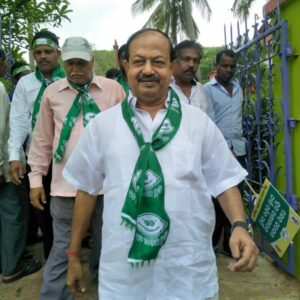
In 2024, there was a change of power in Odisha, and the Bharatiya Janata Party came to power, ending 24 years of BJD rule. After this, Mamata Mohanta and Sujit Kumar resigned from both BJD and the Rajya Sabha, later joining the BJP. They were again elected to the Rajya Sabha on BJP tickets.
According to an official notification, elections for the vacant Rajya Sabha seats will be held on March 16. Out of the four vacant seats, based on the strength in the Assembly, two seats are expected to go to BJP and one to BJD. No party has a clear majority for the fourth seat. However, since BJP is in power, the possibility of political maneuvering for the fourth seat cannot be ruled out. Alternatively, under pressure from central BJP leadership, BJD may extend unconditional support to the BJP candidate for the fourth seat.
For the one seat that falls to BJD according to numerical strength, the name of Debi Prasad Mishra is almost finalized. Debi Mishra is the Senior Vice President of BJD, a veteran leader, and a founding member of the party. Before BJD, he was in the Janata Dal and served as President of the Youth Janata Dal. The late mass leader Biju Patnaik gave him the MLA ticket from the Badamba constituency in 1995. From then until 2019, Debi Mishra continued to win elections from Badamba. However, unfortunately, he faced defeat in 2024.
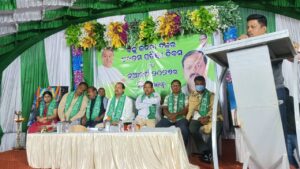
After the Janata Dal split in 1997, a regional party named Biju Janata Dal was formed, and Biju Patnaik’s son Naveen Patnaik became its president. From the beginning, Debi Mishra remained a close associate of Naveen Patnaik. In 2000, the BJD–BJP coalition government came to power, and Naveen Patnaik became Chief Minister. Debi Mishra served as Minister of State for Health in Naveen’s first cabinet.
Since then, Debi Mishra has remained one of Naveen Patnaik’s most loyal associates. During the 24-year BJD government, he handled many important departments, serving in most ministries except Finance and Revenue.
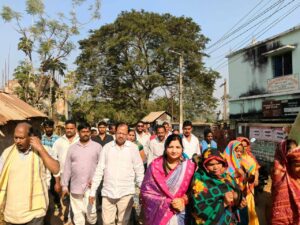
In the 2024 general elections, BJD was defeated, and Debi Mishra also lost from his Badamba constituency for the first time. After this, several party leaders openly expressed dissatisfaction with the leadership over faulty strategies. However, Debi Mishra maintained his loyalty to the party and its leader. As a result, party president Naveen Patnaik appointed him as Senior Vice President. Following the Supremo’s guidance, he efficiently handled party responsibilities and helped transform BJD into a strong and effective opposition party.
Debi Mishra is a senior, front-line leader of BJD with significant influence within the party. He holds strong sway in the politics of undivided Cuttack district and is respected by all factions of the party, as well as by leaders of BJP and Congress. He has rescued the party from crises many times, earning him the reputation of a “crisis manager.” Most importantly, Debi Mishra is seen as a leader completely dedicated to BJD. The party Supremo himself believes that under no circumstances would Debi Mishra leave the party or betray it. If Debi Mishra is nominated as the BJD candidate for the Rajya Sabha, there is unlikely to be any opposition within the party. Above all, considering his loyalty to the party and Supremo, and the respect he commands among leaders and workers, party circles widely regard Debi Mishra as the most suitable candidate for the Rajya Sabha.
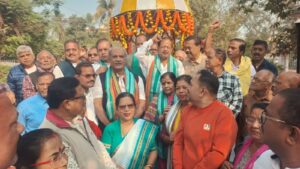
CONTINUING CONTINUITY OF HONESTY
His achievements proved his capability as a true public representative. He presented facts effectively and always tried to carry along party leaders, the organization, and followers together. As President of the Youth Janata Dal, his popularity spread across Odisha.
Loyalty, hospitality, behavior, competence, experience, and ideological clarity — all these qualities in him were considered outstanding.
Badamba–Narsinghpur in Cuttack district was once a neglected region. Before 1995, district administration had hardly reached the common people. The respected Debi Babu maintained close contact with every village and every household during his long tenure as MLA.
With his efforts, leadership emerged in many underdeveloped villages, and government benefits began reaching every household.
However, with the closure of the sugar mill and his long tenure as MLA, over time it became difficult for his workers to properly understand and connect with people’s issues.
An independent candidate received sympathy votes from villages. The Bharatiya Janata Party candidate was not very active in election management, yet Debi Babu received the votes he was expected to get.
Had the BJP candidate secured a few more votes, Debi Babu might not have faced difficulty. The inactivity of Congress and BJP failed to divide votes significantly in the constituency.
Even after defeat, Debi Babu remains active and committed to the party. If he gets the opportunity in the Rajya Sabha, he will be able to reorganize and strengthen the party. It is worth noting that since 1990, we have witnessed his deep connection with the people.
After 1990, in the Badamba–Narsinghpur region, certain unwritten qualities were expected from anyone who wished to become an MLA.
The person must have a clean and respectable public image.
- He should own a house and a vehicle and must be a resident of the area.
- He should be married within his own community.
- He should be capable of feeding at least five people every day.
- He should not be involved in conflicts, disputes, money dealings, or brokerage in the area.
Debi Prasad Mishra had all these qualities, he was selected as a candidate in 1995. Earlier, no MLA had ever been elected continuously from Badamba in such a manner.
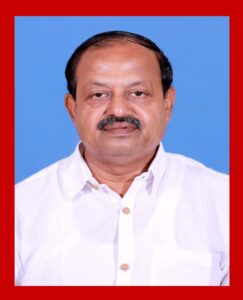
DEBI PRASAD MISHRA’s Biography
In the long and evolving story of Odisha’s public life, a few leaders stand apart not for loud proclamations, but for steady commitment, integrity, and an unbroken bond with the people. Among them, Debi Prasad Mishra, Vice President of the Biju Janata Dal, occupies a distinct and respected place. His journey is not merely political—it is deeply human, shaped by discipline, humility, and an unwavering sense of duty.
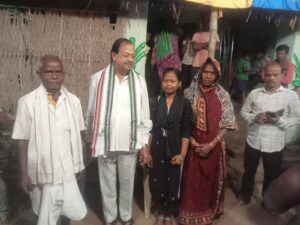
Early Life: Roots in Simplicity
Debi Prasad Mishra’s story begins in the soil of rural Odisha, where values are not taught through speeches but through lived experience. Raised in a modest environment, he absorbed early lessons of honesty, hard work, and compassion. Those who knew him in his youth often recall a thoughtful, soft-spoken individual with a strong moral compass and a natural inclination toward public service.
His early life did not promise power or prominence, but it nurtured something more enduring—character. The simplicity of his upbringing would later become the foundation of his clean public image and grounded leadership style.
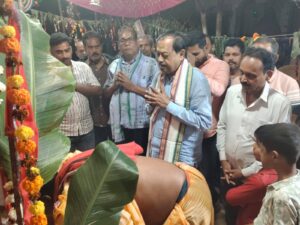
Entry into Public Life: Politics as Service
Mishra did not enter politics as an ambition; he entered it as a responsibility. Drawn by the call to serve society, he gradually became involved in grassroots political activity during the days of the Janata movement. His sincerity and organizational ability soon brought him recognition, and he emerged as a dependable worker who understood people before politics.
His real political turning point came when the legendary leader Biju Patnaik recognized his potential and entrusted him with the responsibility of contesting from the Badamba constituency in 1995. That trust was not misplaced. From that moment onward, Debi Prasad Mishra’s political journey became inseparable from the aspirations of the people he represented.
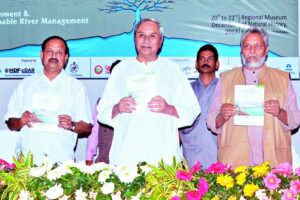
A Trusted Associate of Naveen Patnaik
When the Biju Janata Dal was formed in 1997 under the leadership of Naveen Patnaik, Debi Prasad Mishra stood firmly by his side—not merely as a colleague, but as a loyal and trusted associate. Over the decades, this relationship evolved into one of mutual respect and deep political understanding.
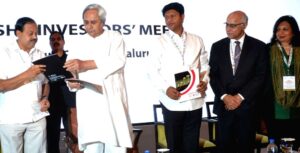
In government, Mishra handled several important responsibilities with quiet efficiency. He was never a leader of noise, but of substance—calm in crisis, balanced in judgment, and unwavering in loyalty. Party insiders often describe him as a pillar of stability, someone who could be relied upon when circumstances grew uncertain.
Clean Image and Honest Character
In an era where public life is often clouded by controversy, Debi Prasad Mishra has maintained a remarkably clean and dignified image. His reputation for honesty is not a crafted narrative—it is a lived reality.
He is known for:
- Transparency in public dealings
- Personal simplicity despite long years in power
- Respectful conduct across party lines
- Firm adherence to ethical politics
For many, he represents an older, nobler tradition of leadership—where character matters more than charisma.
Grassroots Leadership and Public Connection
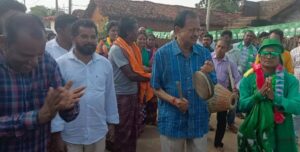
What truly defines Mishra is his enduring connection with the grassroots. Politics, for him, has never been distant from people’s everyday lives. Villages, households, and ordinary citizens have remained at the center of his public journey.
He listened more than he spoke. He reached out rather than waited. He built relationships, not just political networks. Even after electoral setbacks, his bond with people did not weaken—because it was never built merely on victory, but on trust.
In regions like Badamba and Narsinghpur, his name still evokes familiarity, respect, and emotional warmth. For many families, he is not just a political leader, but someone who walked with them through their struggles.
Popularity Within the Party
Inside the Biju Janata Dal, Debi Prasad Mishra commands rare goodwill. He is seen as:
- A bridge between generations of leadership
- A crisis-resolver in difficult political moments
- A disciplined and loyal organizational pillar
- A leader respected across factions
His elevation as Vice President of BJD reflected not only his experience but also the trust he enjoys within the party. Unlike many who seek power, Mishra’s influence has grown quietly—through consistency, not ambition.
A Leader Beyond Victory and Defeat
The 2024 electoral setback tested many leaders, but Mishra’s response revealed his true character. He neither complained nor distanced himself from the party. Instead, he stood steadier than ever, working to strengthen the organization and uphold its values.
In politics, loyalty is often spoken of; in Mishra’s life, it has been practiced.
The Human Side of Leadership
Beyond titles and offices, Debi Prasad Mishra remains, at heart, a simple and reflective individual. He carries the quiet strength of someone who believes leadership is not about authority, but about responsibility. His journey reminds us that politics, when guided by integrity and compassion, can still be noble.
His story is not dramatic, yet it is deeply moving—a story of patience over ambition, service over spectacle, and character over power.
And perhaps that is why, in the hearts of many, Debi Prasad Mishra is not just a political leader—he is a symbol of trust.