

A Life of Struggle, Sacrifice, and the Birth of Odisha
History remembers nations through wars and rulers, but some nations are born through ideas, patience, and sacrifice. Odisha is one such land. The formation of the Odia state was not the result of a sudden political decision; it was the culmination of decades of relentless struggle led by one towering figure—Madhusudan Das, rightly revered as Utkala Gourav and increasingly acknowledged as the Father of the Odia Nation.

His life was a saga of personal loss, political isolation, financial ruin, and unwavering faith in one belief: “Without unity of language and identity, a people cannot survive.”
Early Life: An Odia in a Fragmented Land
Born in 1848 in Satyabhamapur near Cuttack, Madhusudan Das grew up in an Odisha that did not exist on the political map. Odia-speaking regions were scattered under different British provinces—Bengal, Madras, and the Central Provinces. Odias were administratively marginalized, culturally overshadowed, and linguistically threatened.
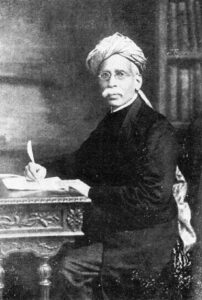
Educated at Calcutta University, Madhusudan Das became:
- The first Odia graduate
- The first Odia lawyer
- The first Odia member of the Legislative Council
- The first Odia member of the Central Legislative Assembly
- The first Odia to travel to England
At a time when Western education often alienated Indians from their roots, Madhusudan Das chose a different path—he returned to Odisha to serve his people.
Awakening of a Mission: Language as Nationhood
Madhusudan Das clearly understood something most leaders of his time ignored:
Language is not merely a medium of communication—it is the soul of a people.
The Odia language faced existential threats, especially from attempts to replace it with Bengali in administration and education. Madhusudan Das stood firmly against this cultural erosion, arguing that denying a people their language was the first step toward erasing their identity.
This conviction became the foundation of his life’s mission.
Utkala Sammilani: The Birth of an Idea (1903)
In 1903, Madhusudan Das founded Utkala Sammilani (Utkal Conference)—a historic moment not just for Odisha, but for India.
Its Radical Demand
- Unification of all Odia-speaking regions
- Creation of a separate Odia province
This was revolutionary. Decades before linguistic states became national policy, Madhusudan Das articulated the logic of linguistic self-determination.
Under his leadership, Utkala Sammilani transformed into a structured movement involving:
- Intellectuals
- Lawyers
- Teachers
- Zamindars
- Students
- Cultural activists
- Kings
The Lone Voice Before the Empire
Madhusudan Das represented Odisha before numerous British commissions and constitutional forums. Armed not with slogans but with maps, census data, economic logic, and historical evidence, he argued Odisha’s case relentlessly.
He appeared before:
- The Risley Commission
- The Hare Committee
- Constitutional reform bodies under British rule
Time and again, Odisha’s demand was delayed, diluted, or dismissed. Yet, Madhusudan Das never withdrew.
He fought the Empire with documents, dignity, and determination.
Criticism, Isolation, and Moral Courage
Unlike many contemporaries, Madhusudan Das believed in constitutional struggle rather than mass agitation. This stance made him unpopular among some nationalists and even isolated within the Congress.
He was labeled:
Too moderate
Too cooperative
Too idealistic
But history proved his foresight. His strategy ensured that Odisha’s demand became administratively inevitable, not politically reversible.
Personal Sacrifice: Poverty for a Province
Perhaps the most tragic chapter of Madhusudan Das’s life is his personal sacrifice.
He spent his wealth on the movement
Neglected legal practice
Lost political patronage
Died financially broken
Yet, he never expressed regret.
His family shared this sacrifice. His daughter Sailabala Das emerged as a nationalist, social reformer, and activist, continuing his legacy of service.
A Dream Unfulfilled—Yet Fulfilled
Madhusudan Das passed away in 1934, two years before Odisha was formed. He did not live to see the realization of his life’s mission.
On April 1, 1936, Odisha became:
The first Indian state formed on linguistic basis
A historic precedent for the reorganization of India
That state stood on the intellectual and moral foundation laid by Madhusudan Das.
Why He Is the Father of the Odia Nation
Madhusudan Das did not rule Odisha. He created Odisha. He is the father of the Odia Nation.
He gave Odias:
- A Language
- An Identity
- A Pride
- A Nation
- A Consciousness
- Linguistic self-respec
- Cultural confidenc
- A permanent place in Indian federal history
Just as Mahatma Gandhi shaped India’s freedom, Madhusudan Das shaped Odisha’s existence.
Legacy Beyond Time
Today, every Odia school, institution, assembly, and cultural space is a living testament to his struggle. His ideals remain deeply relevant in an era where identity, language, and dignity still demand protection.
He lost everything—
but gave Odisha everything.
Conclusion
Madhusudan Das stands tall not because he sought power, but because he sacrificed power for principle. His life teaches that nation-building is not always dramatic; sometimes it is quiet, patient, and painfully lonely.
In the story of Odisha, he is not just a leader of the past—
he is the conscience of the present and the architect of the future.
Madhusudan Das will forever remain the Father of the Odia Nation.