

When one hears the daily clamour of certain political parties regarding a caste-based census, it feels as though the same ideologies that once partitioned the country on the basis of religion have now awakened with a vow to fragment society on the basis of caste. However, this noise also raises several questions in the mind of a common citizen.
If various castes such as Chasa, Khandayat, Kumbhar, Gauda, Bhandari, Dhoba, Kandara, Pana, Radhi, Gudia, and Brahmin continue to exist in society today; if they continue to perform their traditional ancestral occupations; and if inter-caste marriages are still not widely prevalent among them; and if certain castes have been receiving various reservation benefits for generations—then why is there such hesitation regarding a caste-based census?

If caste still exists, its enumeration is also necessary! Everything is already functioning on the basis of caste. No government has ever taken a decision without considering caste-based factors. Jobs are granted based on caste, and public representatives are selected based on caste. Caste is a reality today. When animals, birds, trees, vehicles, temples, mosques, churches, and gurudwaras are being counted, where is the difficulty in counting castes?
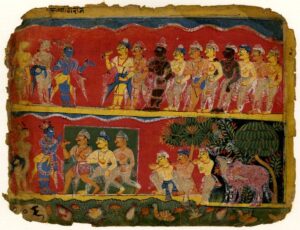
Debates on this issue are ongoing in most media outlets. Varnas emerged in late Vedic society between 1000 BCE and 500 BCE. While the first three groups—Brahmins, Kshatriyas, and Vaishyas—had parallels with other Indo-European societies, the addition of Shudras was likely a Brahmanical innovation in Northern India.
Primarily, a caste census will help in properly understanding and addressing caste-based discrimination and inequality in India. It will also assist in improving the implementation of policies based on caste. India has a long history of caste-based discrimination and marginalization. Through a census, we can obtain empirical evidence of existing inequalities, enabling the government and civil society to design interventions to promote social justice and equality.
The History of Census in India
- 1872: The first census was conducted under Viceroy Lord Mayo.
- 1881–1931: The British Raj censuses included an enumeration of all castes.
- Post-Independence (1951): The Government of India directed that no specific castes be mentioned during the census, with the exception of Scheduled Castes (SC) and Scheduled Tribes (ST).
- 1951–2011: Data for only SC and ST populations were published, alongside data on religion, language, and socio-economic status.
- 1961: The Centre advised states that they could conduct their own surveys if they wished to prepare specific “OBC” (Other Backward Classes) lists, as there was no central reservation for OBCs at that time.
While many argue that a caste census is socially divisive and fuels communal conflict, the enumeration of SCs and STs since 1951 hasn’t caused such conflicts. Furthermore, the census already tracks religion, language, and region—all of which can be just as divisive as caste.
Opponents argue it will fuel demands for increased reservation. Conversely, the availability of accurate data would prevent arbitrary claims by various groups and assist the government in decision-making. Without data, it is difficult to resolve the demands of groups like the Marathas, Patidars, Jats, or Khandayats for reservation.
For a culturally and linguistically diverse country like India, a caste census feels essential for several reasons:
- Social Necessity: Caste remains a fundamental social construct. Neighbourhoods are often divided by caste. Citizens are still identified as “upper” or “lower” caste by their surnames, symbols, and attire.
- Legal Necessity: Constitutional mandates for social justice—including reservations in education and employment—cannot be properly followed without detailed caste data.
- Administrative Necessity: Data is needed to avoid the wrongful inclusion of non-eligible castes, the exclusion of deserving ones, and to ensure that a few dominant castes do not monopolize benefits within a reserved category. It is also required for sub-categorization and determining “creamy layer” criteria.
- Moral Necessity: The absence of data helps a small coterie of upper castes retain a lion’s share of the country’s wealth, income, and power.
In the Indra Sawhney case (1992), the Supreme Court stated that the OBC list should be revised periodically. Furthermore, the 73rd and 74th Amendments (1993) provided for OBC reservations in Panchayats and Municipalities. This makes area-specific caste data for OBCs absolutely essential.
When states like Uttar Pradesh and Madhya Pradesh tried to implement OBC reservations in local body elections, High Courts and the Supreme Court stayed the moves due to a “lack of empirical data.” It is ironic that one arm of the state—the Judiciary—demands caste data to support reservations, while the Executive avoids collecting that very data. Notably, in 2022, the Supreme Court upheld the 10% EWS (Economically Weaker Sections) reservation despite a similar lack of specific data. Given the EWS reservation, the census should now count all castes, including the upper castes.
While Census is a Union subject, the “Collection of Statistics Act, 2008” empowers states to collect necessary data. This has allowed states like Karnataka and Bihar to conduct caste surveys.
If India truly wants to be free from the caste system:
- Inter-caste marriages must be voluntarily accepted, starting with efforts from upper castes.
- The use of surnames should be abolished.
- Temple priests should be appointed based on degrees in Vedic studies rather than birth/caste.
- Ultimately, all forms of caste-based reservation should be abolished.
Until these goals are achieved, as long as caste exists, its enumeration is necessary.
 Pramod Dhal
He is a social commentator, author, and wildlife photographer from Kendrapara, Odisha. His work focuses on judicial integrity, administrative reform, and citizens’ rights. He is the author of “The Birds of Orissa: A Pictorial Encyclopedia,” for which he received the Sambad Parivesh Samman Award. Contact: +91 7008810112.