

It is deeply saddening that the poaching of the world’s rare melanistic (black) tiger species in Similipal has once again come to light. There was a time when we felt immense pride seeing National Geographic features on this unique species found in Odisha; why, then, have we failed so miserably to protect them? While tiger populations are flourishing in states like Karnataka, Uttar Pradesh, Assam, West Bengal, Maharashtra, Rajasthan, and Madhya Pradesh, why is the number of tigers in Odisha steadily declining? Satkosia was once famous for its tigers, but today that population has dwindled to zero. Has the root cause ever been investigated, or has any action been taken against the officials responsible for this oversight?


A few days ago, I was heartened to see headlines in almost every newspaper: “Black Tiger Safari in Similipal.” I thought that, finally, our Forest Department and Government had understood the significance of a ‘Tiger Safari.’ I assumed they had studied the positive impacts of safaris in National Parks like Ranthambore and Sariska (Rajasthan); Bandhavgarh, Kanha, Panna, and Satpura (MP); Tadoba-Andhari and Pench (Maharashtra); Bandipur and Nagarhole (Karnataka); Dudhwa (UP); Corbett (Uttarakhand); and the Sundarbans (West Bengal). However, it would not be wrong to say that what is happening in Similipal is a safari in name only.
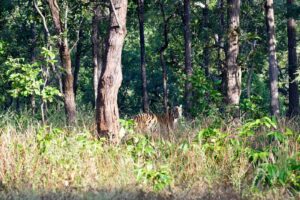
Based on my observations and comparisons with other major tiger reserves in India, the core issue lies in the management system, specifically route planning. In other states, reserves are divided into various zones with multiple independent routes. This ensures that tourist vehicles are scattered. In Similipal, however, all 12 permitted vehicles travel together in a single ‘convoy’ on a single route (Nuagaon, approx. 24 km) and return via the same path. When 12 vehicles move simultaneously on one road, their collective noise and vibration naturally drive wildlife away from the tracks. In other reserves, single vehicles on diverse routes make wildlife sightings easier; here, it is nearly impossible. A successful safari requires technical management, not just luck. Similipal’s current approach feels more like a deception of tourists than a strategic conservation effort.
Lessons from Bandhavgarh
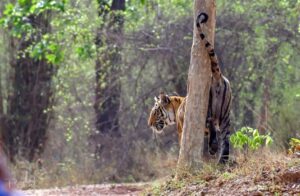
Having researched tigers for years and authored the first Odia book on them (“Bagh: Kete Jana Kete Ajana”), I feel it is my duty to inform the public about what a real safari looks like. Let’s look at Bandhavgarh National Park:
- Zoning: Out of 1500 sq. km, 700 sq. km is the ‘Core Area’ and 800 sq. km is the ‘Buffer Area.’ Only 20% of the Core Area (approx. 140 sq. km) is open to tourists. The remaining 80% remains strictly untouched to allow undisturbed wildlife movement.
- Strict Discipline: Drivers and guides are highly trained professionals. If a vehicle enters a minute early or returns a minute late, they are fined. Vehicles cannot deviate even a few feet from the track, and tourists cannot disembark. Violations lead to the suspension of the guide/driver for weeks, ensuring strict adherence to rules.
- The Results: Bandhavgarh has over 75 tigers. The tiger population in Madhya Pradesh grew from 257 in 2010 to 785 in 2023.
Why Safaris Actually Protect Tigers
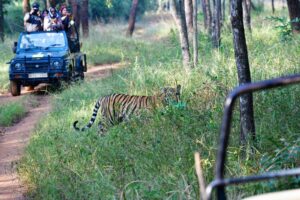
- Constant Surveillance: Regular tourist flow means poachers cannot operate easily. Forest staff are forced to stay alert because tourists are everywhere in the designated zones.
- Sustaining the Food Chain: Proper management leads to an increase in herbivores (prey base), ensuring a steady food supply for predators.
- Community Stakes: This is the most vital point. In states like MP and Rajasthan, the local community’s livelihood depends on tourism. They work as guides, drivers, and watchers. When the tiger brings them a dignified life and income, they become its greatest protectors.

Conclusion
Tiger conservation cannot be achieved through a “colonial mindset” where the Forest Department acts as the ‘Ruler’ and locals as ‘Subjects.’ Success comes when you win the confidence of the local people and make them stakeholders.
We have already lost all the tigers in Satkosia. Let us not waste time with half-hearted “experiments” in Similipal. We must implement a full-scale, professionally managed Tiger Safari like other states. By opening specific zones for regulated tourism, we can stop poaching, provide livelihoods, and see the tiger population thrive again.
For Odisha, an open forest safari is the ultimate mantra for conservation!
 Pramod Dhal
He is a social commentator, author, and wildlife photographer from Kendrapara, Odisha. His work focuses on judicial integrity, administrative reform, and citizens’ rights. He is the author of “The Birds of Orissa: A Pictorial Encyclopedia,” for which he received the Sambad Parivesh Samman Award. Contact: +91 7008810112.