

Few political figures in India carry the aura of legend quite like Biju Patnaik—aviator, freedom fighter, statesman, industrial visionary, and above all, the towering son of Odisha who helped shape its modern identity. To speak of Biju Patnaik is not merely to recount the career of a chief minister; it is to narrate the story of courage that leapt from cockpit to cabinet, from wartime skies to public life, leaving behind a legacy stitched with daring, compassion, and fierce regional pride.

Early Life: Born for Adventure
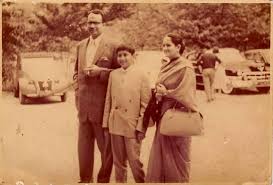
Biju Patnaik was born on 5 March 1916 in Cuttack, then part of the Bengal Presidency under British India. Raised in a family that valued education and nationalist ideals, young Bijayananda—later known simply as “Biju”—grew up in an atmosphere charged with patriotic ferment. His early education at Ravenshaw Collegiate School and later at Ravenshaw College exposed him to both intellectual rigor and nationalist thought, but classrooms alone could not contain his restless spirit.
Aviation soon called him, and he answered with enthusiasm. Training as a pilot, he developed a lifelong bond with the sky—a relationship that would later transform him into one of the most daring figures of India’s freedom movement.
The Freedom Fighter Who Flew Beyond Borders
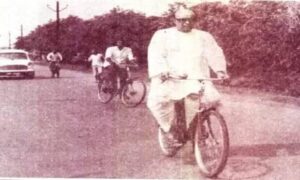
Biju Patnaik’s contributions to India’s struggle for independence were anything but conventional. During the Indian independence movement, he used his aviation skills to assist underground nationalist operations. His courage reached legendary proportions during World War II and its aftermath.
One of his most celebrated missions came in 1947, when he flew into war-torn Indonesia to rescue nationalist leaders resisting Dutch colonial rule. This daring operation earned him immense respect internationally, and Indonesia later honoured him with its highest civilian award. For Biju, however, the mission was simply an extension of his belief that freedom knew no borders.
Builder of Modern Odisha
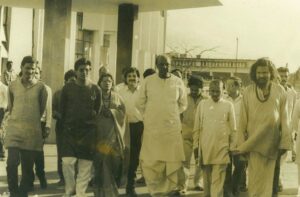
If Biju Patnaik’s youth was shaped by adventure, his political life was guided by vision. He served twice as the Chief Minister of Odisha (1961–63 and 1990–95), and his tenure remains synonymous with bold developmental thinking.
He believed Odisha deserved not sympathy but strength. Under his leadership, the state witnessed significant industrial expansion. He championed infrastructure projects, encouraged heavy industries, and envisioned ports, roads, and power plants as instruments of social justice rather than mere economic tools.
Biju Patnaik also placed enormous emphasis on education and youth empowerment. Institutions established or strengthened during his era reflected his conviction that Odisha’s future rested in trained, confident young minds. His approach was pragmatic yet emotional—rooted in a deep personal love for the land he often called “Utkala.”
The Man Behind the Myth
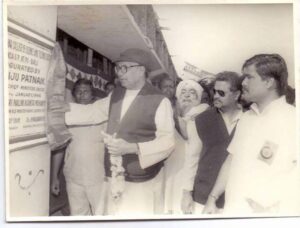
Despite his towering public persona, Biju Patnaik remained deeply human. He was known for his simplicity, directness, and occasional bluntness—qualities that endeared him to ordinary people. Villagers often saw in him not a distant politician but a protective elder, someone who spoke their language and understood their struggles.
His friendships cut across party lines, and his leadership style blended charisma with command. He could be fiercely assertive in political negotiations yet astonishingly gentle in personal interactions. Those who met him often recalled his laughter first—loud, contagious, and unmistakably genuine.
A Heroic Legacy
Biju Patnaik passed away on 17 April 1997, but his memory continues to loom large over Odisha’s political and emotional landscape. The naming of Biju Patnaik International Airport stands as a fitting tribute to a man who belonged to the skies. His legacy also lives through his son, Naveen Patnaik, who carried forward his father’s political vision in contemporary Odisha.
More importantly, Biju Patnaik endures in the collective imagination of the Odia people as the “maker of modern Odisha”—a leader who refused to accept limitations imposed by geography or history. His life reminds us that leadership can be fearless without being harsh, visionary without losing empathy, and powerful without losing humanity.
Conclusion: A Life Larger Than Time
To write about Biju Patnaik is to write about motion—of aircraft slicing through clouds, of ideas reshaping societies, and of one man’s relentless determination to uplift his people. He remains not just a chapter in Odisha’s history but a living presence in its identity.
In the end, Biju Patnaik’s greatest achievement may not have been the industries he built or the offices he held, but the confidence he instilled in a generation—that Odisha could stand tall, proud, and unafraid beneath its vast, open sky.