

In a moment of profound pride for Odisha and the nation at large, UNESCO has officially accepted the Serial Nomination of Odisha’s Golden Triangle—Ratnagiri, Udayagiri, and Lalitgiri—into India’s Tentative List for World Heritage status. This significant development places Odisha’s ancient Buddhist heritage firmly on the global cultural map and marks an important step toward eventual inscription on the UNESCO World Heritage List.
Odisha’s Golden Triangle: A Cradle of Buddhist Civilisation

The Golden Triangle of Ratnagiri, Udayagiri, and Lalitgiri, located in the districts of Jajpur and Cuttack, represents one of the most important and continuous centres of Buddhism in the Indian subcontinent. Flourishing between the 5th and 13th centuries CE, these sites collectively narrate the evolution of Buddhism from early monastic traditions to mature Vajrayana practices.
Unlike isolated monuments, the three sites together form a serial cultural landscape, demonstrating the interconnected growth of monastic education, art, architecture, and spiritual practice. Their inclusion as a single serial nomination underscores their shared historical, religious, and cultural significance.
Ratnagiri: The Jewel of Buddhist Learning
Ratnagiri, meaning “Hill of Jewels,” was a renowned centre of Mahayana and Vajrayana Buddhism. Excavations have revealed imposing brick stupas, well-planned monasteries, exquisite stone sculptures, and iconic seated Buddha images. The site reflects a highly developed monastic system and international scholarly exchange, with evidence of links to Southeast Asia and Tibet.
Ratnagiri’s artistic excellence and architectural sophistication make it one of the finest surviving examples of Buddhist heritage in eastern India.

Udayagiri: The Largest Monastic Complex
Udayagiri stands out as the largest among the three sites, featuring expansive monasteries, votive stupas, and intricately carved sculptures. The remains suggest a thriving religious and academic centre where monks engaged in philosophical discourse, meditation, and ritual practices. Udayagiri’s layout highlights the communal nature of Buddhist life and the advanced organisational structure of monastic institutions during the period.
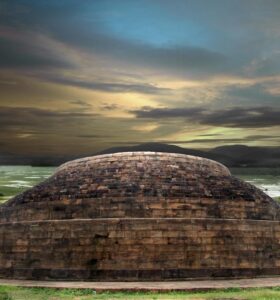
Lalitgiri: The Earliest Buddhist Footprint
Lalitgiri holds exceptional archaeological importance as the earliest known Buddhist site in Odisha. The discovery of a relic casket believed to contain sacred remains of the Buddha elevates its global religious significance. The site presents a continuous cultural sequence from early Buddhism through later Mahayana phases, offering invaluable insights into the region’s long-standing spiritual traditions.

Significance of UNESCO’s Acceptance
Inclusion in India’s Tentative List is a crucial prerequisite for World Heritage nomination. UNESCO’s acceptance acknowledges the Outstanding Universal Value (OUV) of Odisha’s Golden Triangle and validates its authenticity, integrity, and cultural importance. It also opens the path for detailed documentation, conservation planning, and international scholarly engagement required for final inscription.
This recognition reinforces India’s civilisational narrative as the birthplace and nurturer of Buddhism and highlights Odisha’s vital role in preserving and propagating the Buddha Dhamma across Asia.
Cultural, Tourism, and Conservation Impact
The move is expected to significantly boost heritage tourism, attract global attention, and generate sustainable livelihood opportunities for local communities. More importantly, it places renewed responsibility on stakeholders to ensure scientific conservation, sensitive tourism development, and community participation in heritage management.
With focused efforts, the Golden Triangle can emerge as a global centre for Buddhist studies, cultural diplomacy, and spiritual tourism.
A Step Towards Global Recognition
UNESCO’s acceptance of the serial nomination of Ratnagiri, Udayagiri, and Lalitgiri is more than a procedural milestone—it is a recognition of Odisha’s timeless contribution to world heritage. As India advances toward full World Heritage inscription, the Golden Triangle stands as a powerful symbol of peace, learning, and spiritual coexistence, echoing the universal message of the Buddha for generations to come.