

The controversy surrounding Jagatguru Swami Avimukteshwaranand Saraswati at the 2026 Magh Mela in Prayagraj has exposed far more than a dispute over a religious title. Beneath the surface lies an uncomfortable truth about institutional hypocrisy, bruised egos, and the struggle for symbolic power within India’s Hindu religious hierarchy—a struggle increasingly played out in public, mediated by the state, and amplified by politics and media.
What was once an inward-looking debate within monastic traditions has now turned into a spectacle at the Sangam, undermining the very spiritual authority the protagonists claim to defend.

The Title That Became a Throne
At the heart of the conflict is Swami Avimukteshwaranand’s assertion of his position as Jagatguru Shankaracharya of Jyotir Math, a claim contested by sections of the religious establishment and cited by the Magh Mela administration as legally ambiguous due to a pending Supreme Court case.
Ironically, those now invoking “tradition” to oppose him have historically rejected judicial interference in religious succession. For centuries, Shankaracharya lineages operated outside state validation, relying on guru-shishya parampara and monastic consensus. Yet today, the same religious figures selectively lean on court proceedings and administrative notices—when convenient—to weaken a rival.
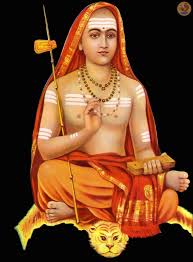
This selective reliance on law reveals a deeper hypocrisy:
When courts affirm tradition, they are rejected; when courts obstruct rivals, they are celebrated.
The Mauni Amavasya Flashpoint: Spirituality Meets Status Anxiety
The confrontation on Mauni Amavasya was less about crowd control and more about symbolic hierarchy. The refusal to allow a traditional palanquin procession—an established marker of spiritual status—struck at the core of monastic prestige.
Swami Avimukteshwaranand’s reaction, including a sit-in protest and refusal to take the holy dip, was framed as resistance against insult. Yet critics argue that a true renunciate’s authority lies in detachment, not public standoffs. The spectacle of protest, hunger strike, and televised outrage sat uneasily with claims of spiritual transcendence.
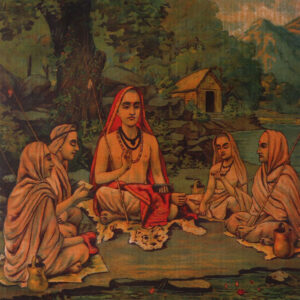
This is where ego eclipsed ethos.
When saints demand protocol, deference, and public validation, they begin to resemble the very power structures they claim to renounce.
Saints Versus Saints: A War of Moral Superiority
Perhaps the most damaging aspect of the controversy is the open warfare among religious leaders themselves. Competing Shankaracharyas, sants, akharas, and spiritual influencers traded accusations of illegitimacy, ignorance, and arrogance.
Each side claimed guardianship of dharma while publicly dismantling the credibility of the other.
The result?
A spiritual discourse reduced to credential-checking, lineage-policing, and televised insult matches.
This internecine conflict has exposed how religious authority in contemporary India increasingly mirrors political rivalry—complete with camps, loyalty blocs, and strategic outrage.
The State as Arbiter—and Convenient Villain
The Magh Mela administration’s role further complicates the narrative. While officials insist they acted in the interest of public order and legal prudence, their decision to question a religious title in a public notice was, at best, tone-deaf.
Yet the administration also became a convenient scapegoat for a conflict that pre-dated the Mela by decades.
Religious leaders who have long failed to resolve succession disputes internally now accuse the state of interference—while simultaneously seeking state recognition, police protection, and administrative privilege.
This dual posture—denouncing state authority while demanding its endorsement—is another layer of institutional hypocrisy laid bare by the controversy.
Politics, Optics, and the Loss of Moral High Ground
Predictably, political actors entered the fray, turning a theological dispute into a talking point on governance, cultural respect, and identity politics. Once that happened, the spiritual moral high ground was irreversibly lost.
When religion becomes a tool for political posturing and public mobilisation, dharma gives way to optics.
The Sangam, meant to symbolise unity and transcendence, instead reflected fragmentation, rivalry, and the anxious preservation of authority.
Conclusion: A Crisis of Authority, Not Just a Controversy
The Shankaracharya controversy at Magh Mela 2026 is not merely about who holds a title. It is about who controls meaning, hierarchy, and legitimacy in a rapidly changing religious landscape.
What stands exposed is:
The ego embedded within institutions that preach renunciation
The hypocrisy of selectively invoking tradition, law, or state power
The erosion of spiritual authority through public power struggles
If India’s religious leadership wishes to retain moral credibility, it must confront this contradiction honestly. Otherwise, such conflicts will continue to erode faith—not in any one Shankaracharya, but in the integrity of the institutions themselves.
The real tragedy is not the clash at the Sangam.
It is the quiet loss of humility where it was expected most.