

Aviation Accidents at the Peak of Influence and Power
In recent years, India’s political and national leadership has endured several high-profile deaths in aviation accidents. Three prominent figures — General Bipin Rawat, Vijay Rupani, and Ajit Pawar — all lost their lives in airborne tragedies, each at a juncture of significant influence and stature. Although their careers differed vastly in domain and trajectory, the circumstances of their deaths and their implications for Indian governance and politics invite a close look.

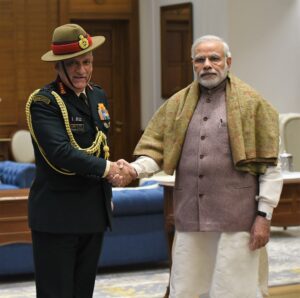
1. General Bipin Rawat (1958 – 2021)
Profile and Rise
General Bipin Laxman Rawat was the first Chief of Defence Staff (CDS) of India, appointed in January 2020. He had previously served as Chief of Army Staff of the Indian Army and held operational leadership roles across counter-insurgency theaters and strategic positions within the Defence Services. His elevation as CDS was designed to integrate the army, navy, and air force under a unified command structure — a post of historic significance in Indian military history.
Circumstances of Death
On 8 December 2021, General Rawat died in a helicopter crash near Coonoor, Tamil Nadu, while en route to deliver a lecture at Defence Services Staff College, Wellington. The Indian Air Force Mi-17V5 helicopter crashed into hilly terrain, killing Rawat, his wife Madhulika, and most of the 14 passengers and crew. Investigation findings later indicated human error exacerbated by weather conditions as a leading factor.
Impact and Legacy
Rawat’s death was widely seen as a substantial loss for India’s defense establishment. It abruptly halted the tenure of a leader at the peak of his strategic influence — one whose role was central to ongoing reforms and military coordination.

2. Vijay Rupani (1956 – 2025)
Profile and Rise
Vijay Ramniklal Rupani was a veteran Indian politician from the Bharatiya Janata Party (BJP) who served as the Chief Minister of Gujarat from August 2016 to September 2021. His political career spanned grassroots leadership, municipal governance, membership in the Rajya Sabha, and stewardship of Gujarat through periods of economic challenge and recovery.
Circumstances of Death
On 12 June 2025, Rupani was among the passengers on Air India Flight AI-171, which crashed shortly after take-off from Ahmedabad while bound for London. The Boeing 787-8 Dreamliner was destroyed in the accident, killing 241 of the 242 people onboard; Rupani’s remains were identified through DNA matching.
Impact and Legacy
Rupani’s sudden death reverberated across Indian politics, especially in Gujarat where he was a seasoned administrator and respected figure. He was accorded a state funeral with full honours, and his passing sparked reflection on both his governance style and the vulnerability of air travel even for seasoned public servants.

3. Ajit Pawar (1959 – 2026)
Profile and Rise
Ajit Anantrao Pawar was a senior leader in Maharashtra politics, serving multiple terms as Deputy Chief Minister and exerting strong influence over the state’s fiscal policies and coalition dynamics. As one of Maharashtra’s most enduring political figures, he played a major strategic role in alliance formation and governance across decades.
Circumstances of Death
On 28 January 2026, Pawar died in a plane crash near Baramati Airport in Pune district when the chartered Learjet 45XR he was travelling in veered off the runway during an attempted landing, burst into flames, and killed all occupants. Investigations by the Directorate General of Civil Aviation (DGCA) and the Aircraft Accident Investigation Bureau are underway to determine definitive causes.
Impact and Legacy
Pawar’s death occurred amid active election campaigning and at a moment of significant political involvement, triggering state mourning and national attention. Given his extended influence in Maharashtra and Indian politics, his abrupt demise created a power vacuum and triggered discourse on VIP travel safety.
Patterns and “Hidden Similarities”
Aviation as the Mode of Death
A clear commonality among all three figures is death in an aviation accident — helicopter in Rawat’s case, and fixed-wing aircraft in Rupani’s and Pawar’s. These incidents reflect the inherent risks associated with air travel, even for highly experienced or frequently flying public figures.
- General Bipin Rawat: Mi-17 military helicopter crash.
- Vijay Rupani: Commercial Air India Boeing 787 crash.
- Ajit Pawar: Private Learjet charter crash.
This pattern resonates with several other historical Indian leaders whose lives ended in aviation accidents (e.g., Sanjay Gandhi, Madhavrao Scindia), highlighting a persistent thread in Indian public life.
Timing Relative to Influence
Another shared element is that each death occurred at a time when the individual held high stature or continued relevance:
Rawat was serving in the newly created and strategically critical Chief of Defence Staff role.
Rupani remained a respected former chief minister and experienced administrator.
Pawar was active in ongoing political mobilization and wielded strong regional influence.
In each case, their deaths interrupted ongoing responsibilities or potential future roles, amplifying institutional and political impact.
Public and Political Reaction
All three deaths triggered considerable public mourning, reflection on leadership legacies, and discussions about systemic safety improvements — particularly in Vip/VVIP air travel protocols.
Conclusion
The deaths of General Bipin Rawat, Vijay Rupani, and Ajit Pawar reveal a poignant intersection: prominent national service and leadership cut short by aviation accidents. While their careers spanned different arenas — military leadership, state governance, and political strategy — the commonality of air travel tragedies at moments of ongoing influence underscores both the unpredictability of life at the highest levels and the continued need for rigorous aviation safety standards for individuals whose roles shape public policy and national security.