

In Odisha, food is never just food—it is faith, identity, and a living tradition. At the heart of this cultural universe stands Jagannath Temple, where Lord Jagannath is worshipped not only through rituals but through an elaborate and sacred food tradition. This deep connection between divinity and daily life finds one of its simplest yet most profound expressions in a humble dish: Pakhala.
The Divine Connection: Food as Worship

Lord Jagannath, revered as the “Lord of the Universe,” is unique among deities for his intimate association with food. The temple kitchen in Puri is one of the largest in the world, where offerings are prepared with strict adherence to tradition and sanctity. Here, food is not merely consumed; it is consecrated, becoming Mahaprasad—sacred nourishment that transcends social and economic barriers.
While Pakhala may not always be part of formal temple offerings, its spirit resonates deeply with the philosophy of Jagannath culture: simplicity, inclusiveness, and harmony with nature. Just as Mahaprasad is shared by all, irrespective of caste or status, Pakhala too is a dish that unites Odias across class, geography, and generation.
Pakhala: A Cultural and Climatic Wisdom
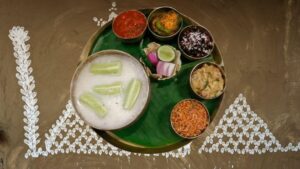
Pakhala, a preparation of fermented rice soaked in water, is a testament to Odisha’s ecological intelligence. In a region marked by intense summers and high humidity, this dish evolved as a natural response to climate. It cools the body, aids digestion, and sustains energy—qualities that modern nutrition science now recognizes as highly beneficial.
But beyond its nutritional value, Pakhala is an emotional anchor. It carries memories of home, of shared meals, of rural life, and of a slower, more balanced way of living. From farmers in the fields to families in urban homes, Pakhala remains a constant—a quiet symbol of continuity in a rapidly changing world.
Tradition Meets Science
What generations practiced out of necessity and wisdom is now validated by science. The fermentation process in Pakhala encourages the growth of beneficial microorganisms, particularly lactic acid bacteria, which improve gut health and enhance nutrient absorption. Rich in B vitamins and essential minerals, it stands today as a model of functional, sustainable nutrition.
In an age dominated by processed foods and artificial solutions, Pakhala reminds us that the answers to many modern problems—heat stress, digestive issues, and even sustainability—may lie in traditional practices.
The GI Tag Debate: Recognition Beyond Borders
Despite its cultural depth and widespread relevance, Pakhala has yet to receive Geographical Indication (GI) tag recognition. This is surprising, especially when compared to Odisha Rasagola, which has successfully secured its place as a protected cultural asset.
A GI tag is more than a legal certification. It is a powerful acknowledgment of a product’s origin, uniqueness, and cultural significance. For Pakhala, such recognition would:
- Safeguard its traditional preparation methods
- Strengthen Odisha’s cultural identity on a global platform
- Promote sustainable and indigenous food systems
- Provide economic opportunities through culinary tourism and branding
Why It Matters Now
As globalization reshapes food habits, there is a growing risk of losing indigenous knowledge. Traditional dishes are either forgotten or commercialized in ways that strip them of authenticity. Granting GI status to Pakhala would ensure that its essence—its simplicity, its cultural roots, and its connection to the land—remains intact.
Moreover, aligning Pakhala with the legacy of Lord Jagannath elevates the conversation. It is no longer just about a dish; it is about preserving a way of life that blends spirituality, sustainability, and community.
A Call for Collective Action
The journey toward GI recognition cannot rest solely on government initiatives. It requires a collective effort—academics, cultural historians, policymakers, chefs, and citizens must come together to document, promote, and advocate for Pakhala.
Celebrations like Pakhala Divas are important steps in this direction, but they must be complemented by sustained policy action and public awareness.
A Bowl of Identity
In every serving of Pakhala lies a story—of resilience against climate, of harmony with nature, and of a culture that values balance over excess. When seen through the lens of Lord Jagannath’s inclusive philosophy, it becomes even more meaningful.
Recognizing Pakhala with a GI tag is not merely about giving credit to a dish. It is about honoring Odisha’s heritage, protecting its traditions, and presenting its wisdom to the world.
Because in Odisha, devotion is not only expressed in temples—it is served, every day, in a simple bowl of Pakhala.