

The spiritual landscape of Odisha has been shaped by numerous saints, poets, and reformers whose teachings have influenced the social and cultural life of the region for centuries. Among them, saint‑poet Bhima Bhoi (1850–1895) occupies a distinctive place in the religious and literary history of the state. His devotional poetry and humanitarian philosophy profoundly influenced the Mahima Dharma movement, a reformist religious tradition that emerged in nineteenth‑century Odisha.
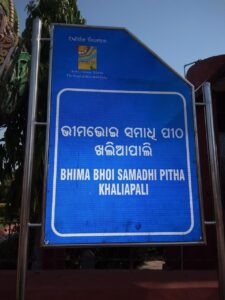
The village of Khaliapali, located in present‑day Subarnapur district of western Odisha, is historically associated with the later years of Bhima Bhoi’s life and work. From this modest rural settlement he propagated the spiritual ideals of Mahima Dharma, composed many devotional poems, and established an Ashram that became a centre of religious activity in the region.

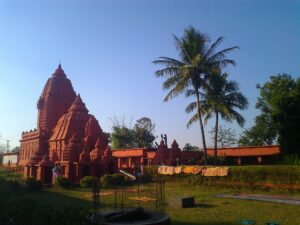
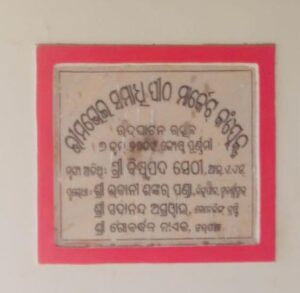
A significant transformation occurred in 1999–2000 when initiatives were undertaken during my tenure as District Collector of Sonepur to restore and develop the Samadhipitha at Khaliapali. These efforts helped transform the neglected shrine into an important centre of pilgrimage and cultural heritage.
Mahima Dharma emerged in the nineteenth century as a unique religious movement in Odisha that emphasized devotion to a formless and universal God. The movement is associated with Mahima Gosain, also known as Mahima Swami or Alekh Baba, who preached the worship of Alekh Niranjan, the indescribable and formless supreme reality.
Unlike many traditional religious traditions, Mahima Dharma rejected idol worship and ritualistic practices. Instead, it advocated devotion, meditation, and ethical living as the path to spiritual realization.
The movement attracted followers from marginalized sections of society and challenged rigid caste hierarchies. The principal centre of Mahima Dharma is located at Joranda in Dhenkanal district, which remains a major pilgrimage centre for its followers.
Bhima Bhoi emerged as the most prominent and courageous spiritual poet and preacher of Mahima Dharma. Born into a humble background, he experienced the hardships and social discrimination prevalent in society.
His poetry expresses deep compassion for human suffering. His famous line, “Mo jeebana pachhe narke padithau, jagata uddhara heu” (Let my life fall into hell if the world can be redeemed) reflects his humanitarian philosophy.
His major literary work, Stuti Chintamani, is revered as a sacred text among followers of Mahima Dharma. Through his writings, Bhima Bhoi brought spiritual teachings closer to the common people.
Bhima Bhoi arrived at Khaliapali around 1877 and established an Ashram with the support of local landlord Lochan Bagarty. This happened after his Ashram at Jilunda was torched by those opposing him. The new place soon became a center of spiritual activity in western Odisha.
Bhima Bhoi’s teachings emphasized equality and compassion. He even allowed women to participate in Ashram activities, an unusual, unheard and progressive step in nineteenth‑century Odisha.
After his death in 1895, devotees constructed a beautiful temple out of reverence with the funds collected from devotees over his Samadhi, which gradually became a pilgrimage centre for followers of Mahima Dharma.
Despite its historical importance, the Samadhipitha at Khaliapali gradually fell into neglect and became a forgotten chapter during the twentieth century. The temple structures deteriorated, the premise got shrunk, the approach road to the place remained poor, and there was little institutional support. He never enjoyed any royal support during his life time though few other poets became prosperous due to the support of kings and Zamindars during the contemporary period.
However, few monks living at the Ashram continued their spiritual practices under austere conditions. Visitors were very few except during the annual Magha Mela festival. Yet the spiritual importance of the place remained alive among local people and ardent Mahima devotees.
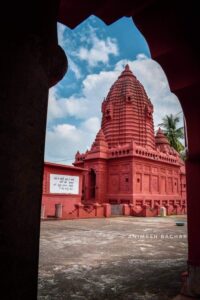
A major turning point occurred in 1999 when I visited Khaliapali while serving as the District Collector of Sonepur. It was at the insistence of some well-known personalities of the areas who desired that I must see how an important place of the district has fallen int ruins. The site’s neglected condition contrasted sharply with its spiritual significance.
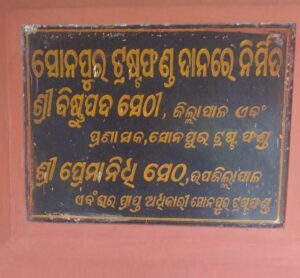
With the support of local citizens and community leaders such as Shri Sadanand Agrawal, a Trust was established to undertake the development of the Samadhipitha. The District Collector, Sub‑Collector, and the Chief Baba of the Ashram were included as ex‑officio members of the Trust. The then MLA, Sj. Narasingha Mishra backed our ideas. It is worth naming Premanidhi Seth, the sub collector who showed exceptional zeal.
A series of development initiatives were undertaken during 1999-2000 by mobilizing resources from government schemes and community support. We came across certain amount kept under the Sonepur Trust Fund by some unscrupulous employees of the Trust and utilized it for this purpose. We sought for funds from Department of Culture, Western Odisha Development Council and other sources later.
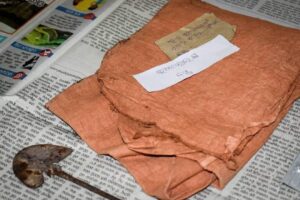
These works included renovation and repair of temple, expansion of its premise, construction of saint shelters, gates, approach road, Bhajan Mandap, guest facilities, sanitation complexes, avenue plantation and landscaping within the Ashram premises. A cowshed, very close to the main temple, housing more than hundred cows were relocated. The encroachment by local people was removed. An eleven‑kilometre black‑topped road was constructed to connect Khaliapali to the main road, significantly improving accessibility.
Agricultural support was also provided through irrigation facilities to ensure food security for monks residing at the Ashram. There were many other works undertaken.
The revival of Khaliapali became a collective effort involving strong community participation within a period of six months. Villagers contributed voluntary labour and even donated land to support the development of the shrine.
Such participation reflected the deep reverence of local people for Bhima Bhoi and their commitment to preserving the spiritual heritage of the region. It was seen that those development works provided a much-needed impetus to the Mahima followers in their spheres of work and worship. The news got spread among the followers like a wild fire.

Today Khaliapali has emerged as an important pilgrimage and cultural destination in western Odisha. Over the years, the public and government have poured in resources to develop the place further. Lakhs of devotees visit the Samadhipitha every year, particularly during the Magha Mela festival.
The devotees and Sadhus gather regularly at the Bhajan Mandap to sing devotional songs composed by Bhima Bhoi and pray for the global peace, continuing a spiritual tradition that has endured for more than a century.
The story of Khaliapali demonstrates how community participation and responsive administration can revive neglected heritage sites.
The initiatives undertaken in 1999-2000 during my tenure as District Collector of Sonepur, along with the active support of local citizens, transformed the Samadhipitha from a neglected shrine into a vibrant centre of pilgrimage and cultural heritage.
Today Khaliapali stands as a living tribute to saint‑poet Bhima Bhoi and the enduring philosophy of Mahima Dharma.
 Bishnupada Sethi
The author is an IAS Officer and presently serves as the Chairman of the Odisha Forest Development Corporation (OFDC) and continues as the Chief Administrator of the KBK districts.