
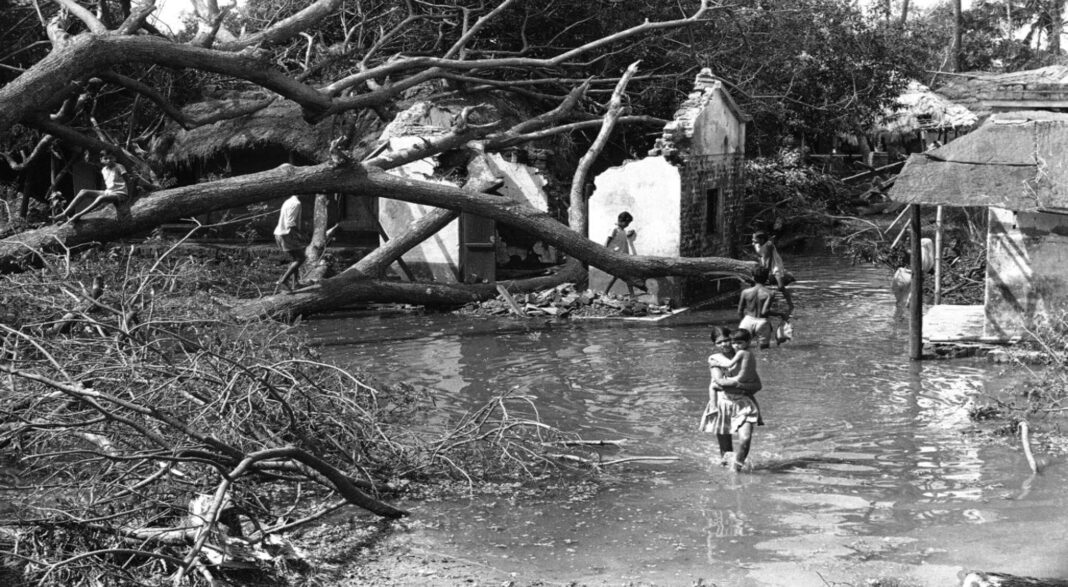
In late October 1971, a devastating cyclone struck the eastern coast of India, leaving behind one of the most tragic chapters in the region’s modern history. Making landfall along the coast of Odisha, the storm unleashed destructive winds, torrential rain, and a massive storm surge that inundated vast low-lying areas. Within hours, entire villages were wiped out, thousands of lives were lost, and fragile rural economies were shattered. What began as a natural weather system quickly escalated into a humanitarian disaster, exposing the deep vulnerability of coastal communities and the inadequacy of disaster preparedness at the time.
International attention soon followed. On 2 November 1971, The New York Times reported that thousands had perished due to the cyclone and the accompanying tidal wave, with communication lines severely disrupted and many areas cut off from immediate assistance. Early casualty figures remained uncertain for days, reflecting the isolation of the worst-affected regions and the difficulty in assessing the scale of destruction.

The cyclone developed as a low-pressure system over the east-central Bay of Bengal around 26 October 1971. Warm sea surface temperatures and favourable atmospheric conditions allowed it to intensify rapidly. By 28 October, it had evolved into a severe cyclonic storm and began moving steadily toward the Odisha coast. In the early hours of 30 October, the cyclone made landfall near Paradeep.
Wind speeds during landfall were estimated to range between 100 and 180 km/h. While these winds caused widespread structural damage, the most catastrophic impact came from the storm surge. Sea levels rose dramatically, generating waves between 2 and 6 metres high. These waves penetrated 20 to 30 kilometres inland in some areas, overwhelming the deltaic plains between the Mahanadi and Baitarani rivers. The flat terrain and absence of natural barriers allowed seawater to rush into settlements with little resistance, inundating homes, fields, and freshwater sources within minutes.
The human toll was immense. Official estimates placed the death count at around 10,000, though initial reports suggested even higher figures due to unreported losses in remote villages. The districts of Cuttack and Balasore were among the worst affected, particularly regions such as Rajnagar, Mahakalpara, and the Jambu delta. Many residents received little warning, and evacuation mechanisms were virtually non-existent. In these vulnerable areas, survival often depended on chance rather than preparedness.
Livelihoods suffered equally severe damage. Approximately 50,000 cattle were lost, depriving families of essential agricultural support and income. Nearly 800,000 homes, most constructed from mud and thatch, were either destroyed or severely damaged. These fragile structures offered little resistance to strong winds and floodwaters, leaving large populations homeless overnight.
Agriculture, the backbone of the rural economy, faced devastating setbacks. The cyclone struck just before the harvest season, destroying standing paddy crops across extensive areas. Flooding and saline intrusion rendered fields infertile, while irrigation systems were damaged beyond immediate repair. The resulting food shortages and loss of income pushed already vulnerable communities deeper into poverty and prolonged economic distress.
Urban areas were not spared. Infrastructure such as roads, electric lines, and communication networks suffered extensive damage, isolating affected regions and delaying relief operations. The breakdown of connectivity made it difficult for authorities to assess the situation quickly or coordinate rescue efforts efficiently.
The cyclone caused lasting environmental damage along the coast. Mangrove forests and wetlands, which serve as natural barriers against storms, were severely degraded by strong winds and saline flooding. Rivers such as the Baitarani and Brahmani overflowed, contributing to further inland flooding and erosion. Changes in soil composition due to saltwater intrusion reduced agricultural productivity and affected local ecosystems.
Infrastructural damage compounded the crisis. Washed-out roads, collapsed bridges, and disrupted communication systems hindered relief work in the crucial initial days. Many affected communities remained inaccessible, forcing survivors to wait for assistance under extremely harsh conditions. At the time, India lacked a robust disaster management framework, and the absence of coordinated planning significantly slowed response efforts.
Relief operations were undertaken by government agencies and voluntary organisations, but the scale of devastation overwhelmed available resources. Aid distribution faced logistical barriers, including damaged transport routes and lack of real-time information. Although assistance eventually reached most affected areas, delays intensified human suffering in the immediate aftermath.
The cyclone occurred during a year marked by multiple extreme weather events across eastern India, including heavy monsoon rains and additional cyclonic disturbances. However, the 1971 event stood out because of its deadly storm surge and the density of population in the affected coastal belt.
This disaster exposed critical systemic weaknesses: inadequate early warning dissemination, absence of cyclone shelters, weak coastal embankments, and poor coordination among administrative agencies. Disaster management at the time was largely reactive, with little emphasis on preparedness or risk reduction.
The 1971 cyclone was not an isolated event but part of a long history of cyclonic activity along the Odisha coast. Records from the Balasore District Gazetteer (1907) indicate that the region experienced several destructive cyclones during the nineteenth century, including major events in 1823, 1831, 1832, 1872, 1882, and 1885. These storms repeatedly caused damage to life, agriculture, and infrastructure, demonstrating the persistent vulnerability of the coastal region.
In the twentieth century, Odisha continued to face severe cyclones, with notable occurrences in 1914, 1925, 1939, 1942, and 1963. Many of these storms brought strong winds, heavy rainfall, and storm surges that affected districts such as Balasore, Cuttack, and Puri. Despite the frequency of these events, systematic preparedness measures remained limited. Early warning systems were underdeveloped, and there was little emphasis on evacuation planning or resilient infrastructure.
This historical pattern highlights that cyclones have long shaped the environmental and socio-economic conditions of coastal Odisha. However, the absence of institutional learning meant that each disaster caused repeated devastation rather than contributing to long-term resilience.
The 1971 cyclone served as a turning point in recognising the need for structured disaster management. It underscored the importance of accurate forecasting, effective communication of warnings, and the development of evacuation strategies. In the decades that followed, India began investing in meteorological advancements, coastal warning systems, and disaster response mechanisms.
Despite these improvements, the lessons of 1971 were not fully implemented by the time the Odisha Super Cyclone struck in 1999. Although forecasting capabilities had improved significantly, gaps remained in last-mile communication, evacuation planning, and infrastructure resilience. Administrative inefficiencies, limited financial resources, and continued settlement in high-risk coastal zones contributed to large-scale losses once again.
The recurrence of such disasters revealed a disconnect between scientific progress and institutional preparedness. While technological capabilities advanced, the implementation of policies at the community level lagged behind. This gap emphasized the need for integrated disaster management that combines science, governance, and community participation.
The 1971 Orissa cyclone remains a powerful reminder of the destructive potential of natural hazards and the importance of preparedness. For the people of coastal Odisha, it was a defining event that reshaped communities, livelihoods, and landscapes. The memory of lost lives and damaged ecosystems continues to influence local awareness and resilience strategies.
Today, with increasing climate variability and the likelihood of more intense cyclonic events, the lessons of 1971 remain highly relevant. Strengthening early warning systems, building resilient infrastructure, restoring coastal ecosystems such as mangroves, and ensuring inclusive disaster planning are essential steps in reducing future risks.
Preparedness and prevention have proven to be far more effective than reactive relief. Investments in these areas not only save lives but also reduce long-term economic losses and social disruption. The experiences of 1971 highlight the importance of proactive governance and community-based resilience.
The cyclone of 1971 exposed deep structural vulnerabilities in coastal Odisha, from fragile housing and weak infrastructure to inadequate disaster management systems. At the same time, it revealed the resilience of affected communities, who rebuilt their lives despite immense hardship.
Remembering this disaster is not merely an act of historical reflection but a call to action. It reminds us that natural hazards cannot be prevented, but their impacts can be mitigated through preparedness, planning, and collective effort. The legacy of the 1971 cyclone continues to inform India’s evolving approach to disaster risk reduction, guiding efforts toward a safer and more resilient future.
 Dr. Bishnupada Sethi
Dr. Sethi serves as the Chaiman of OFDC and Chief Administrator of KBK districts of Odisha.