

In the heart of my ancestral village stands a small temple dedicated to Maa Sitala. Though no documented record exists regarding the origin of her worship or the construction of the shrine, the importance of this village deity is deeply felt by all. The annual puja is celebrated with great enthusiasm and devotion. My childhood memories remain vivid: whenever news of a smallpox outbreak reached nearby areas, villagers would take vows and offer prayers to the goddess, seeking protection for their families. During puja processions, accompanied by the rhythmic beats of drums and cymbals, it was not uncommon for someone to appear possessed by the goddess, delivering prophecies that filled the community with awe and reverence. With the passage of time, fear and belief have evolved, yet the worship continues with undiminished fervour. The goddess is still regarded as the protector of the village.
The worship of Sitala is not confined to a single village or region. In India’s vast and diverse festival calendar where grand celebrations such as Durga Puja and Diwali attract global attention, the veneration of Goddess Sitala unfolds more quietly yet widely across rural shrines, urban alleys, and domestic spaces. Traditionally believed to both cause and cure epidemics, especially smallpox in premodern times, Sitala occupies a unique position in the religious landscape. Her cult, rooted in folk traditions rather than monumental temples, reflects how ordinary people have historically transformed fear of disease into faith and suffering into a meaningful, sacred framework. Far from being obsolete, her worship continues to adapt across regions and communities, preserving a profound connection between health, humility, and spirituality.


Sitala’s origins lie in what sociologists describe as India’s “little traditions”, belief systems associated with indigenous and tribal communities inhabiting regions such as Bengal, Bihar, Assam, and Odisha. Initially, she was worshipped in aniconic forms, represented by stones or earthen mounds placed beneath sacred trees. Over time, through the process of Sanskritization, mainstream Hinduism incorporated her into its broader pantheon while retaining her distinctly local and earthy character. Texts such as the Skanda Purana describe her as riding a donkey and holding a broom, a water pot, and a winnowing fan. Despite this textual recognition, her identity remains closely tied to rural life. Known as the “Mother of Poxes,” she embodies both destruction and healing, her wrath manifesting as disease and her grace bringing relief. In folklore, smallpox is often described as the goddess’s “blessing,” reframing illness not as random misfortune but as a divine visitation. This duality reflects a broader philosophical understanding of nature, where creation and destruction coexist.
The iconography of Sitala is deeply symbolic. Typically depicted in a red sari with dishevelled hair, she carries objects associated with everyday labour and healing. The broom signifies purification, not merely physical cleaning but the removal of spiritual impurities believed to invite disease. The water pot contains cooling liquid, symbolising relief from fever, while the winnowing fan represents the separation of pure from impure. Neem leaves, often tied around her waist, highlight the medicinal properties of nature, long recognised in traditional healing practices. Her mount, the donkey, represents humility and endurance, standing in contrast to the majestic vehicles of major deities. Her large, intense eyes convey both fear and protection, reminding devotees of her dual capacity to harm and to heal. In some depictions, she also holds ashes, reinforcing her association with mortality and regeneration. These elements are not merely decorative; they integrate ecology, medicine, and spirituality into a visual language accessible to all, regardless of literacy.

Ritual practices associated with Sitala further reinforce this grounded theology. On designated worship days, devotees refrain from lighting their hearths and consume only pre-cooked or “cold” food, based on the belief that heat may provoke the goddess’s anger. Offerings typically include uncooked rice, fruits, milk, and neem leaves. During outbreaks of disease, families would create temporary images of the goddess from clay or cow dung and perform rituals to appease her. The afflicted individual was often treated as a manifestation of the goddess herself; pustules were described as “flowers,” and the patient received reverence rather than stigma. Various taboos, such as avoiding shaving, combing hair, or physical intimacy created a form of sacred quarantine that also had practical hygienic benefits. Annual festivals involve community participation, including processions, music, and shared meals. Although animal sacrifice has declined, it was once part of the ritual practice. Women play a central role in these observances, reflecting the maternal aspect of the goddess. In regions like Odisha and Bengal, narratives known as Sitalamangal are performed through songs and theatrical forms such as Sitala Pala, particularly during the peak disease season. These performances blend ritual and storytelling, conveying moral lessons about humility, devotion, and social harmony.
Regional variations in Sitala worship reflect India’s cultural diversity. In eastern India, particularly Bengal and Odisha, she is primarily associated with smallpox and is often worshipped alongside other disease-related deities such as Jvarasur (fever) and Oladevi (cholera). Rituals in these areas emphasize collective appeasement, and the immersion of the goddess’s image symbolises the removal of disease from the community. In North India, she is also revered as a protector of children and is invoked during rituals related to fertility and child health. In Gujarat, her role expands to include the bestowal of prosperity and marital wellbeing, with rituals becoming less austere and more celebratory. Urban contexts, such as Mumbai, reveal fascinating layers of adaptation. Migrant communities have introduced classical iconography, while local groups maintain older, aniconic forms of worship. In some shrines, sculpted idols coexist with simple stones smeared with vermilion, illustrating how traditions accumulate rather than replace one another. The emergence of associated deities, such as Khokala, linked to ailments like cough and cold, demonstrates the evolving nature of this belief system.
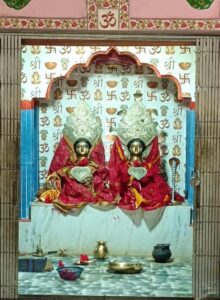
Scholars often interpret Sitala’s status as a “minor” deity as reflective of broader social hierarchies. Her worship has historically been associated with marginalised communities engaged in occupations considered “impure,” such as cleaning, fishing, and herding. While major deities dominate classical texts and grand temples, Sitala thrives in everyday practice among those outside elite structures. Yet this marginality also gives her strength. Unlike distant, abstract gods, she remains intimate and responsive to immediate human concerns. Her cult bridges the gap between “great” and “little” traditions, incorporating influences from Buddhism where the goddess Parnasabari shares similar associations with disease and even from Islamic and Sikh practices in certain regions. This syncretism reflects a pragmatic approach to faith, where communities draw upon multiple sources of spiritual protection in times of crisis.
The advent of colonial rule and modern medicine posed challenges to such traditional practices. Epidemics in the nineteenth century intensified reliance on Sitala, even as colonial authorities promoted vaccination. Initially, resistance arose, as medical intervention was perceived as interfering with divine will. However, the tradition adapted. Following the global eradication of smallpox in the 1970s, Sitala’s worship did not disappear; instead, her role expanded. She is now invoked for protection against various illnesses, as well as for general well-being and especially child welfare. In rural areas, rituals persist as expressions of cultural memory, while in urban settings, migrants continue to honour her in domestic shrines. This continuity highlights the enduring human need for meaning and reassurance, even in the presence of scientific advancement.
From a sociological perspective, the worship of Sitala reveals how religion both reflects and mitigates social inequalities. While hierarchical structures may categorise deities and their followers, communal rituals often foster unity during times of crisis. Folklore frequently contrasts arrogant elites punished by disease with humble devotees who receive the goddess’s grace. In an era of globalisation, where major festivals gain international recognition and commercial appeal, Sitala’s quieter tradition represents an “invisible heritage” that resists homogenisation. It preserves indigenous knowledge, such as the medicinal use of neem and the logic of quarantine that aligns with modern public health principles.
In contemporary times, as new health challenges emerge, Sitala’s relevance persists. Her worship offers not merely superstition but a cultural framework for understanding and coping with illness. It acknowledges that disease is not solely a biological phenomenon but one that is also interpreted through social, moral, and spiritual lenses. By preserving her traditions, communities sustain a holistic approach to resilience; one that integrates faith, memory, and practical wisdom.
The goddess who once soothed the fevers of smallpox now symbolically calms the anxieties of modern life. Her enduring presence underscores a fundamental truth: India’s cultural strength lies not only in its grand monuments and celebrated festivals but also in its modest, living traditions. In these unassuming spaces, people continue to negotiate uncertainty with humility and hope. As long as fear, illness, and the desire for healing remain part of human existence, Sitala will endure; quietly guiding, protecting, and reminding us of the profound wisdom embedded in everyday faith.
 Dr. Bishnupada Sethi
Dr. Sethi serves as the Chaiman of OFDC and Chief Administrator of KBK districts of Odisha.